Following its agreement to acquire Accident Fund Holdings, Inc. (AF Group) alongside positive industry tailwinds, global insurance and reinsurance group Enstar is “excited” about the opportunities ahead, seeing ample room for growth.
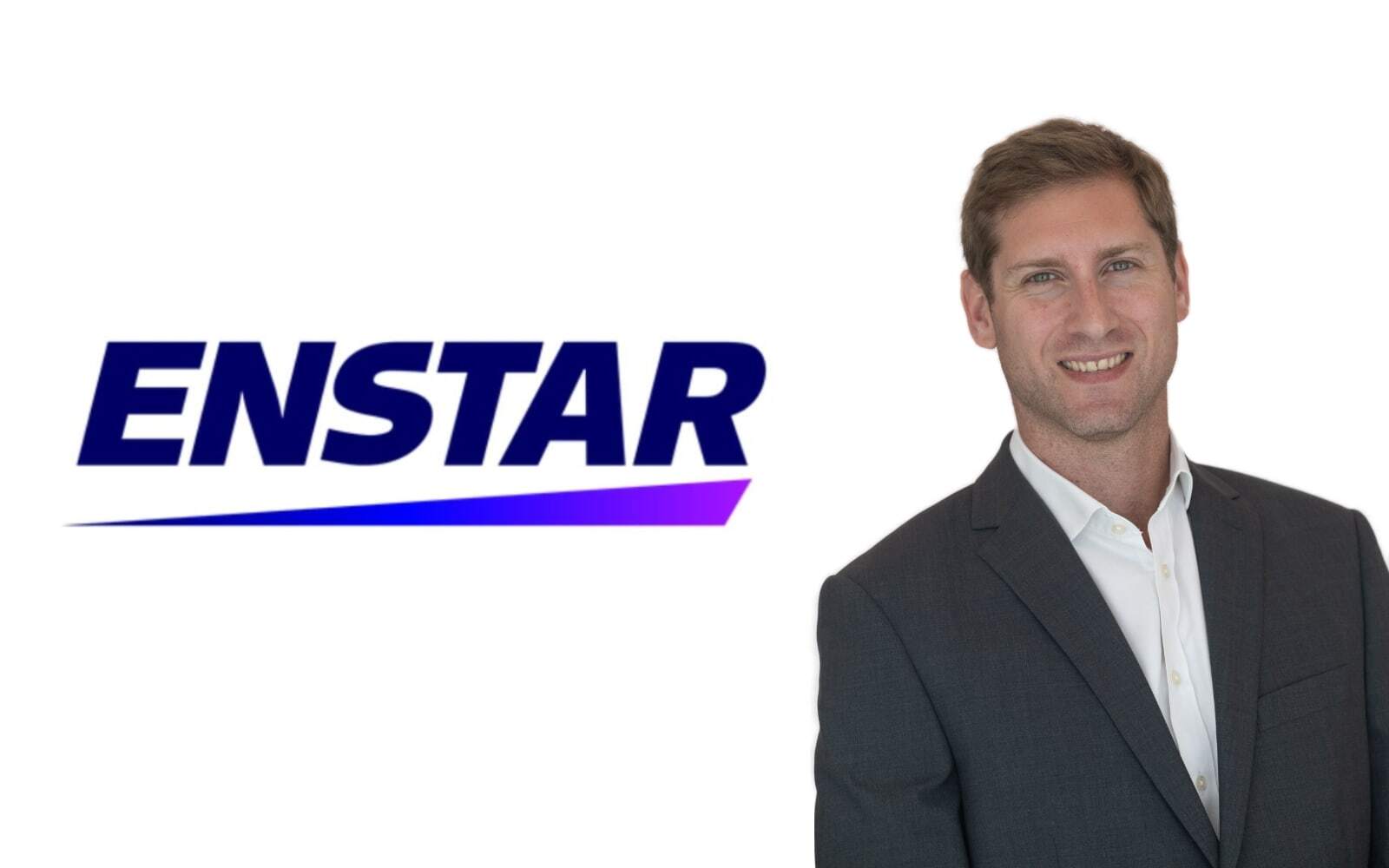 During a recent trip to Bermuda, Reinsurance News spoke with Dan Sanford, Managing Director, M&A at Enstar, about the Bermuda regulatory landscape for legacy players, the opportunity in the US, and the company’s recently announced pending acquisition of AF Group.
“Bermuda is hugely important,” said Sanford. “We’re group regulated here and have had a presence in Bermuda for over 30 years. Cavello Bay Re, which is our largest carrier and has between 80 and 90% of the group’s business is a Bermuda company. So, it’s really fundamental for us, as it is for the reinsurance sector as a whole.”
Sanford explained that the regulation Enstar gets from the Bermuda Monetary Authority (BMA) is very robust, describing the regulator as a vital stakeholder in the business.
“We treat them as a partner, and there’s regular communication. They’ve built a very robust framework for legacy companies, and also a very strong team with a lot of experience and expertise,” he said.

With so many legacy companies being group regulated in Bermuda, the BMA has developed extensive knowledge of the sector.
“Enstar at its core is an innovative and nimble company, and the BMA, as a regulator, is a crucial stakeholder” said Sanford.
Of course, Enstar also gets robust regulation in places like the UK, at Lloyd’s, and in Australia, but Bermuda is somewhat unique in the regulatory dialogue and active engagement between the BMA and firms like Enstar.
Back in February, Enstar announced its acquisition of AF Group, which the group is very excited about.
“The acquisition complements our core legacy business and we think it provides opportunities for growth.” said Sanford.
“On the legacy side, the interaction with the insurance-linked securities (ILS) market is an area that’s really grown over the past few years. On the property side, deals are going to be very much event driven as they create the necessity. However, trapped collateral is a definite focus area for all managers. A key trend is the growth of third-party capital interest in much longer duration casualty and specialty business, where there is a focus on cutting the tail – here, we have a strong pipeline for our forward exit option product in particular.
“Outside of ILS, there’s always going to be opportunities for us in US casualty, where it’s critical to stay disciplined and select the right risks. Elsewhere, we’re seeing a pickup in activity on mainland Europe and within Lloyd’s, where London Bridge 2 is effectively connecting institutional investors with insurance risk in the market.”
Sanford went on to highlight an increased focus on business development and building your own network, noting a rise in bilateral transactions in the market than there have been historically.
“We are very focussed on building strong relationships and sustainable partnerships going forwards, working closely with counterparties to put together transactions that are mutually beneficial,” he commented.
Expanding on the education point, Sanford emphasised that while there is still an element of educating the market on the impact of legacy solutions, the brokers are doing a good job of sourcing new opportunities.
“We’ve moved from an environment going back five years and beyond, where legacy companies would insist on taking over claims management, and that probably restricted the number of opportunities. We’ve got a lot more flexible in operational structures over the past five years, working closely with counterparties. On many of our deals they retain ultimate control, but we collaborate with them, and actually they’ve seen the benefit of the expertise we have on some of these claims areas. So, that’s one of the selling points. As long as there’s a natural alignment, some of those structures have worked extremely well,” he said.
According to Sanford, one region that still has a lot of untapped potential is the US, which remains a huge opportunity for Enstar and the broader legacy market.
“It’s such a large place that knowing everybody is challenging and brokers’ coverage isn’t guaranteed everywhere – this can mean an increased reliance on their prospective colleagues for introductions. But there’s still so many large insurance companies in the US that don’t necessarily have legacy front of mind.
“The way we think about it is that companies buy prospective reinsurance to cover both volatility and capital relief. Retrospective reinsurance does exactly the same thing in a slightly different way. So, it should really be part of the toolkit for reinsurance buyers and CFOs. It’s not quite there across the sector yet, but there’s a number of frequent buyers of legacy solutions, the likes of Zurich and QBE, and it’s worked very well for them,” he said.
Looking ahead, Sanford noted that he is encouraged by the range of different types of counterparties that are looking to the legacy market for a solution.
“If you were to look at our pipeline, there’s not necessarily a common theme. We are seeing a lot of US regional or national carriers that are coming to the market for the first time. We’re also seeing M&A situations and companies with capital-light balance sheets looking for revolving products to support growth. And there really is a range of classes of business out there.
“It’s a really good development and positive sign that counterparties are trying to think creatively around where they can enhance their own capital position, or shore up their balance sheet.
“We’re seeing a pretty strong pipeline in 2026 and that seems to be the case across the board, speaking to some of our peers as well,” he said.
The post Enstar sees significant growth opportunities on the live and legacy side: Dan Sanford appeared first on ReinsuranceNe.ws.
